Material 01
Hand-twisted Jute
Warm, coarse, structural — twisted by hand from the stalk of the jute plant into rope that holds its form outside.
Warm, coarse, structural — twisted by hand from the stalk of the jute plant into rope that holds its form outside.
Jute is one of the oldest plant fibres in the world. Grown in the Ganges delta, twisted by hand in Bagru — it's warm to the touch, structural in form, and made to age beautifully outdoors.
Jute stalks are retted in water to separate the long bast fibres, then sun-dried, combed, and spun. Artisans in Bagru receive the raw fibre and hand-twist it into rope — a process that gives each piece its characteristic texture and density.
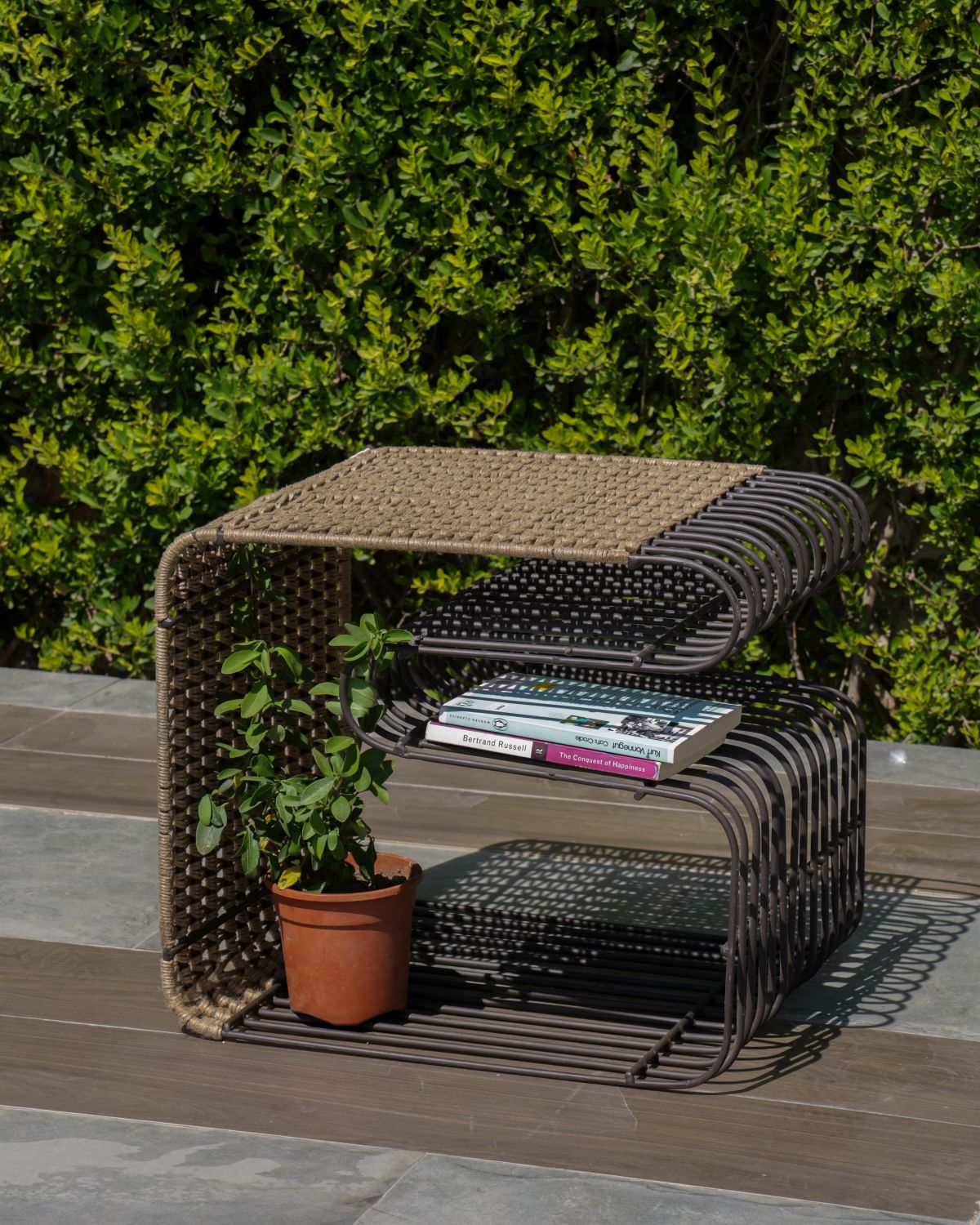
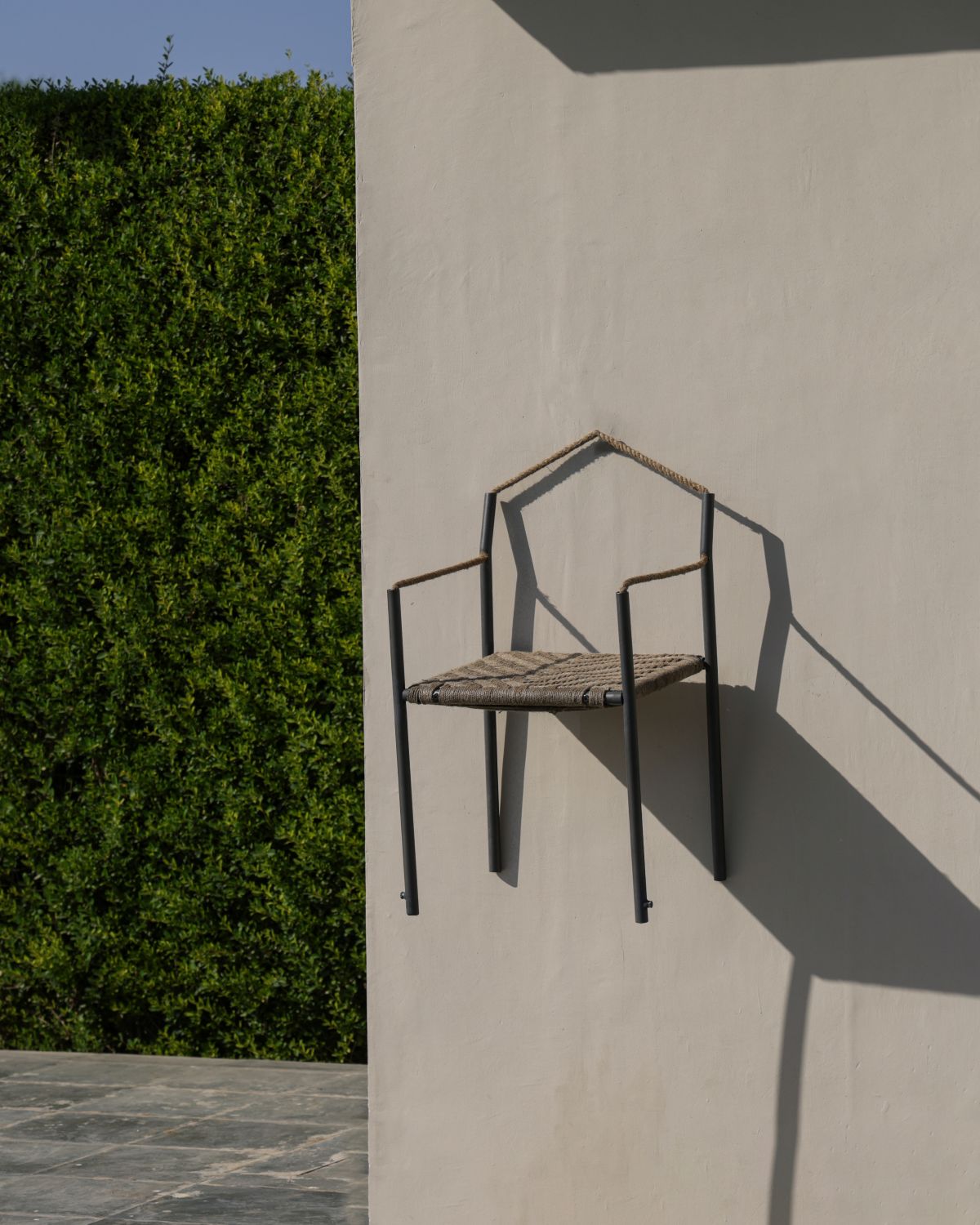
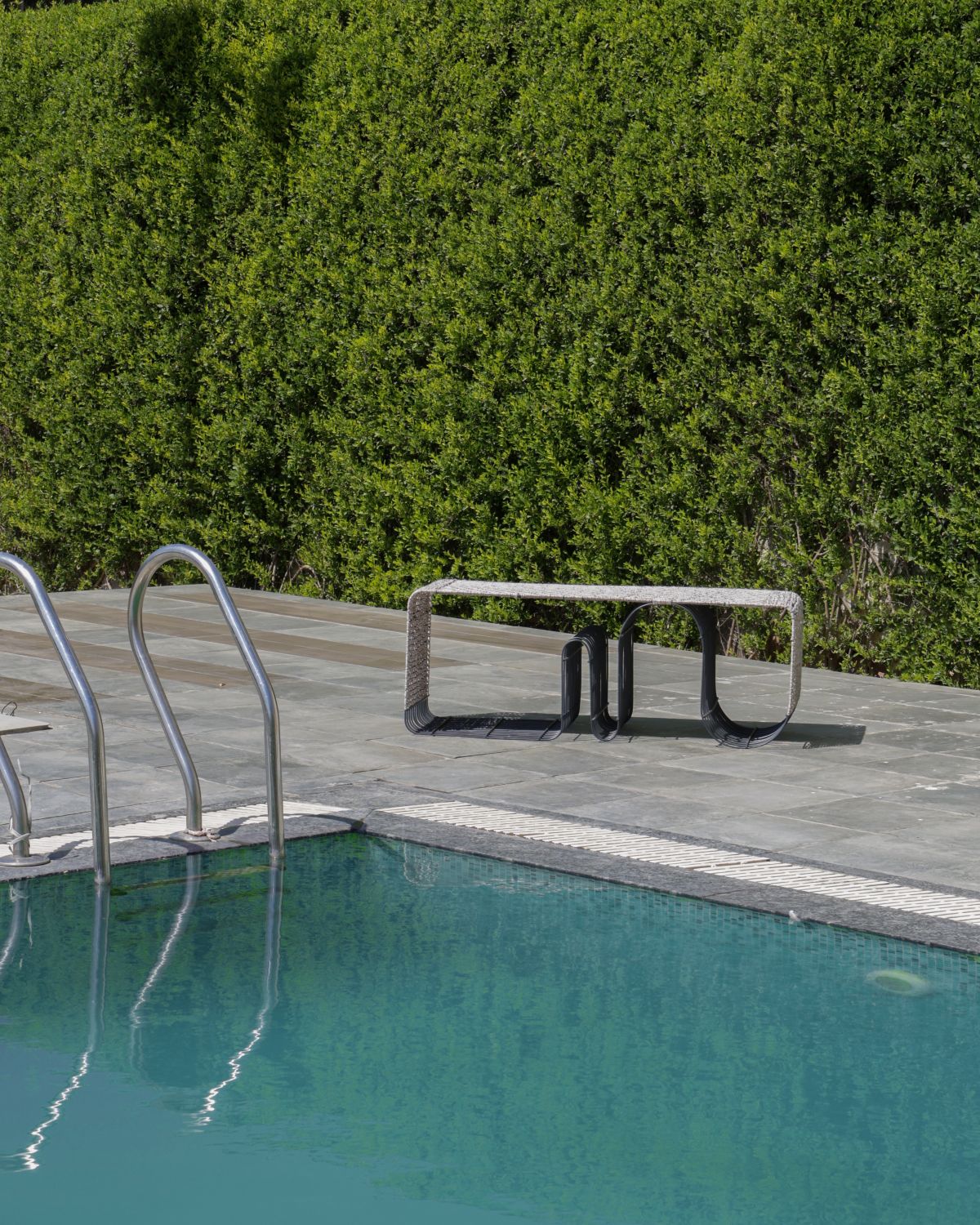
The rope is then woven directly onto powder-coated wrought iron frames — the fibre becomes the surface, the iron holds it in place. No two lengths of hand-twisted jute are identical. That inconsistency is the point — it's what separates furniture made by hand from furniture made by machine.
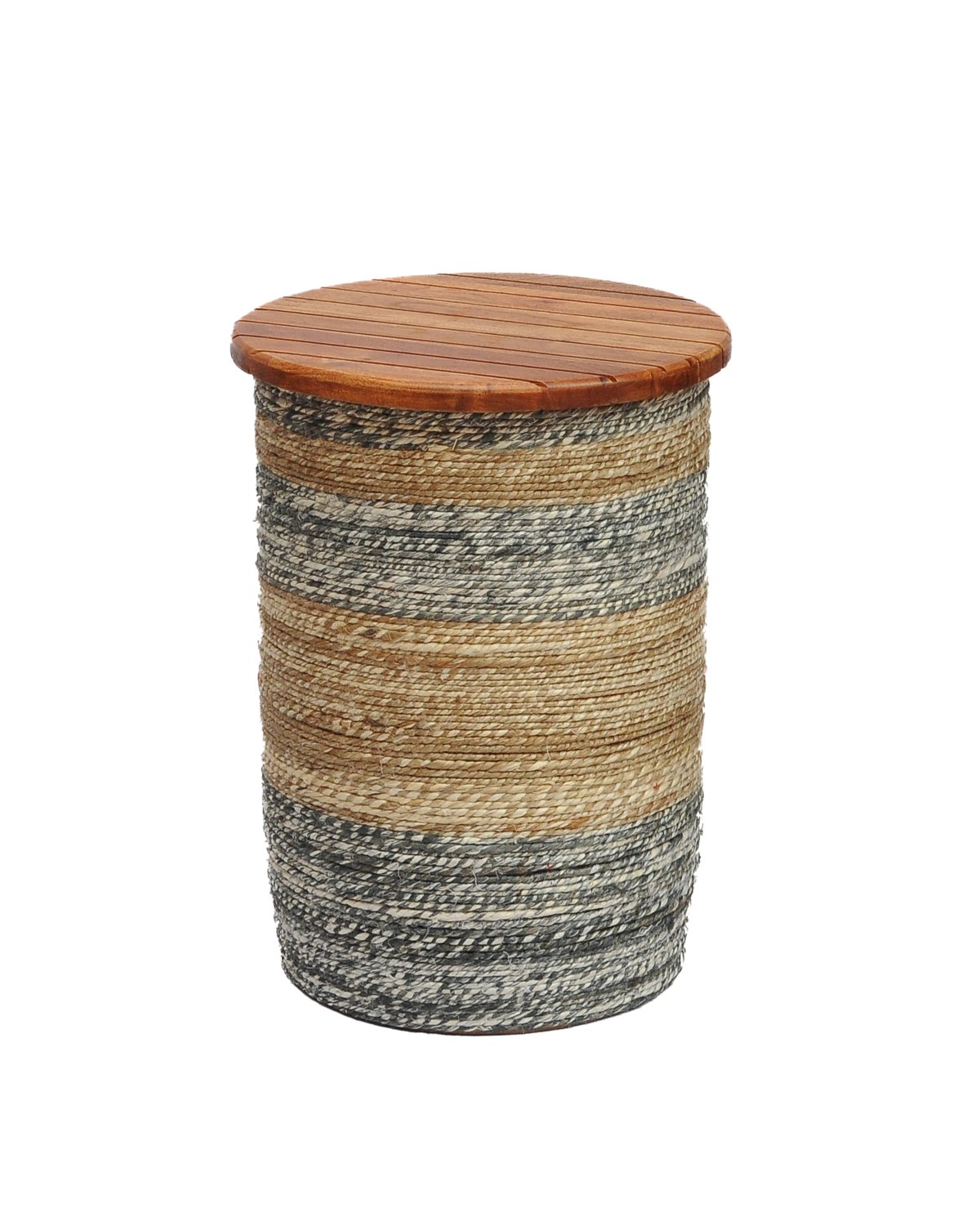
Kenaf (Hibiscus cannabinus) is a fast-growing bast fibre closely related to jute — same family, similar handle, slightly coarser. It's harvested, retted and twisted using the same techniques, but tends to be thicker-stalked, giving it a more pronounced texture and a slightly stiffer rope.
In our collection, kenaf appears as the primary material in the Katora Stool — a bowl-shaped storage stool where the fibre's natural rigidity holds the form. Both jute and kenaf age similarly outdoors: deepening in tone, softening in touch.
Jute is an indoor-outdoor material. It thrives on a covered terrace, verandah, or under a pergola — it handles light rain and morning dew comfortably, but direct heavy rainfall or prolonged saturation will shorten its life. Think of it like a good leather boot: built for the outdoors, but not waterproof.
The colour shifts from golden-warm to a deeper, richer tone over time. Brush off dust, let it breathe, and avoid leaving it submerged in standing water after rain.
Order a small swatch of the rope before you commit to a piece.
Request a swatch →